
Summer lawn care in the Fraser Valley: watering rules, brown grass and what actually helps
Every August the same worried question comes up on estimates: "Is my lawn dead?" Almost always, the answer is no. The cool-season grasses we grow here — fescues, ryegrass, bluegrass — go dormant in summer heat, not dead. Browning off is the lawn protecting itself. When the fall rains come back, so does the lawn.
That said, there's a right way and a wrong way to get a lawn through a Fraser Valley summer, especially with municipal watering restrictions in effect across most of the region from spring to mid-fall.
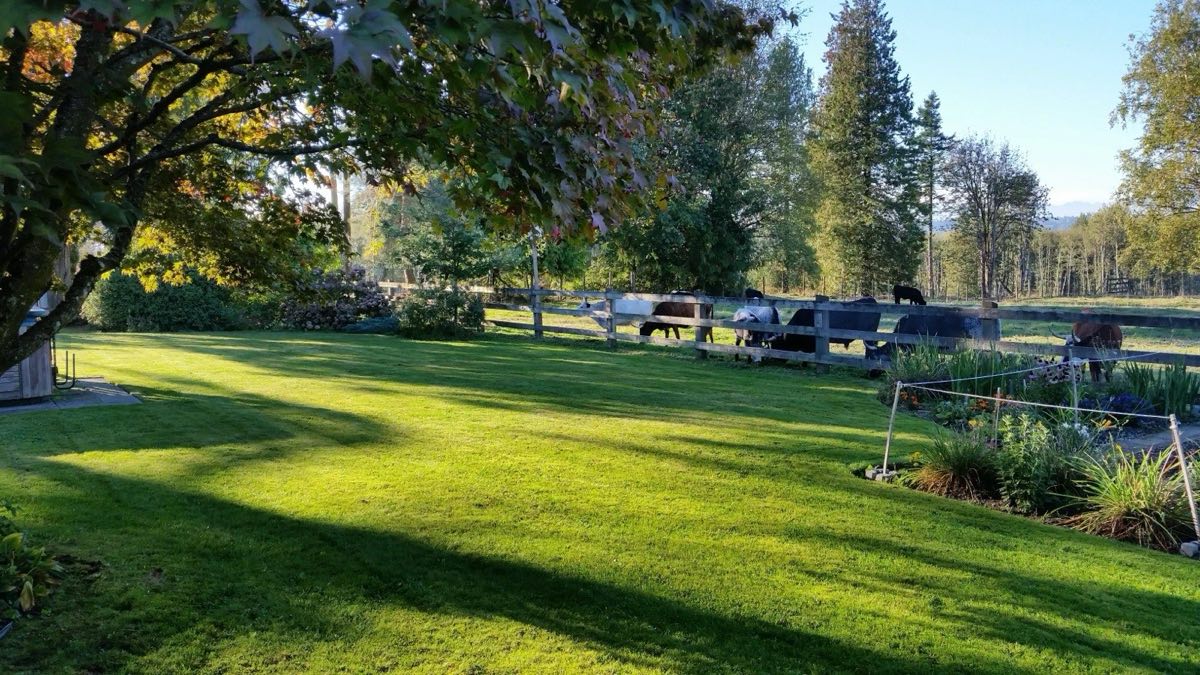
What actually helps
- Mow high. Set the deck up to about 3 inches (7–8 cm). Taller grass shades its own roots, holds moisture longer, and out-competes weeds. A scalped lawn in July is an invitation to chafer beetles and crabgrass.
- Keep blades sharp. Dull blades tear the grass, and torn tips brown instantly in the heat. If your lawn looks whitish a day after mowing, that's the blade, not the weather.
- Leave the clippings. Short clippings returned to the lawn act as mulch and give nitrogen back. (This is what mulching mowers are for.)
- Water deeply, not often — within your local schedule. One good soak in your allowed morning window beats a daily sprinkle. Shallow watering trains shallow roots. Check your municipality's current restrictions — stages and days change year to year.
- Stay off it. Dormant grass doesn't repair traffic damage. Paths worn in August are still visible in October.
What to skip
- Fertilizing in the heat. Fertilizer tells the lawn to grow exactly when it has no water to grow with. It burns. Feed in spring and fall instead.
- Aggressive raking or dethatching. Save any mechanical work for the recovery window in September.
- Panic re-seeding in July. Seed needs consistent moisture to germinate — exactly what watering restrictions make hard to provide in midsummer. Wait for fall.
September is the real fix. Early fall is the best lawn-repair window of the year in the Lower Mainland: soil still warm, rain returning, weeds slowing down. Aerate, overseed, top-dress and feed in September and the lawn that greens up won't just recover — it'll come back thicker than it went in.
If the lawn doesn't come back
A lawn that stays brown and lifts up like a doormat in September has usually had European chafer grubs — or the raccoons and crows that dig for them. That's not a watering problem, and it's worth a proper look before deciding between repair, re-sodding, or converting the worst areas to beds or drought-tolerant planting that never needs this fight again.
Want your lawn set up for a proper fall recovery?
We book September aeration, overseeding and fall-cleanup work through August. Free, itemized estimates across the Fraser Valley and Lower Mainland.
Request a Free Quote