
It started on my grandmother's farm
People ask how long I've been doing this. The honest answer is that I can't remember not doing it.
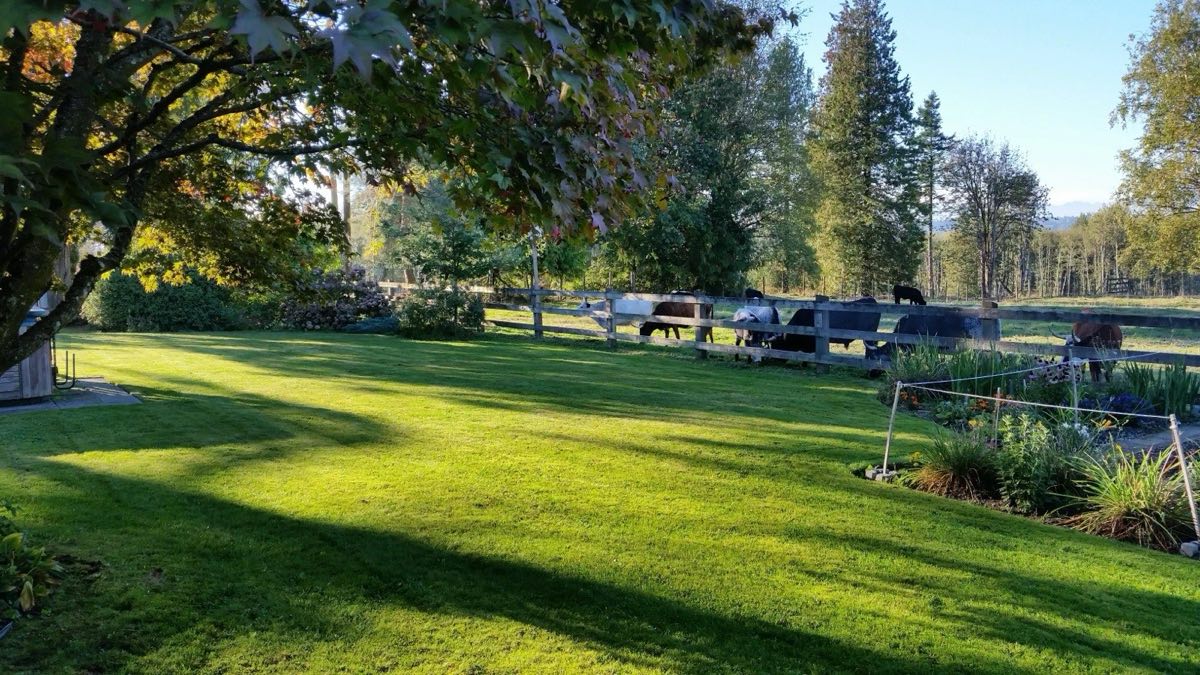
Thirty years ago I spent my summers on my grandmother's farm, and the first job I was given was blackberries. If you've ever fought Himalayan blackberry in the Fraser Valley, you know exactly what that means. It grows faster than you can cut it, the canes are thicker than your thumb, and it fights back. You finish a section, look at what's left, and understand you'll be doing this again next month.
That's the job you get before anyone trusts you with anything else. Nobody hands a kid the hedge shears on day one. You get the work that's mostly effort and no finesse, and somebody watches how you go about it.
Earning the hedges
Eventually I was trusted with the hedges. That was the promotion, and I remember it feeling like one.
A hedge is different from blackberries. Blackberries just need doing. A hedge needs judgment — where the line should sit, how much you can take without going into the brown, when to stop and look at it from the far end of the property instead of standing right on top of it. You can't undo a bad cut on a cedar. Take too much and the gap is there for years, staring at you every time you drive up. That's a lot of responsibility to hand a teenager, and I knew it.
In time the whole job was my responsibility. Mowing, beds, pruning, cleanup, the lot. Not because I'd been trained for it, but because I'd been trusted with it one piece at a time, and hadn't given anyone a reason to take it back.
That's still how I think about crews. You earn the next thing by how you handle the current thing. It's why the same people come back to your property instead of whoever happened to be free that morning — and why I'd rather grow slowly with people I trust than quickly with people I don't.
The other half of the education
Here's the part I didn't understand until much later: I learned as much at her kitchen table as I did out in the yard.
We had coffee. A lot of coffee. She'd want to hear what I'd got done, and I'd tell her, and somewhere in there she'd say something about the place — what had been there before the fence went in, which corner never drained properly and never would. She talked about that ground like it had a history, because to her it did.
That's the thing that stuck. A property isn't a list of tasks. It's somebody's place. Somebody chose that tree. Somebody looks out that window every morning and sees exactly what you left them.
I didn't know at the time that I was learning a trade. I thought I was doing chores and drinking coffee with my grandmother. But everything I believe about this work — that you do it properly whether or not anyone's watching, that the details are the job rather than a bonus, that you leave a place better than you found it — came from those summers.
Why the company is called Cascara
Cascara is a native tree here. It's not showy. It doesn't get planted for curb appeal, and most people walk past one without noticing. But it belongs in this landscape, it's been here far longer than any of us, and it does its job quietly and well.
That seemed about right.
What it means for your property
I started Cascara Landscaping in 2024 so I could run things the way I think they should be run. Twenty-five years in the trade, and the standard hasn't moved: straight lines, crisp edges, clean beds, healthy plants. Show up when you said you would. Quote it honestly. Clean up properly before you leave.
She didn't know that summer work would turn into a career, and then a business of my own. But it's built on what those summers taught me, and every property we take on gets treated like it belongs to someone who'll notice the difference.
Because it does.
— Jeff
Looking after a property in the Fraser Valley?
Free, itemized estimates across the Fraser Valley and Lower Mainland. We'll walk it with you and tell you honestly what it needs.
Request a Free Quote