
When to trim cedar hedges in the Fraser Valley — and why timing matters
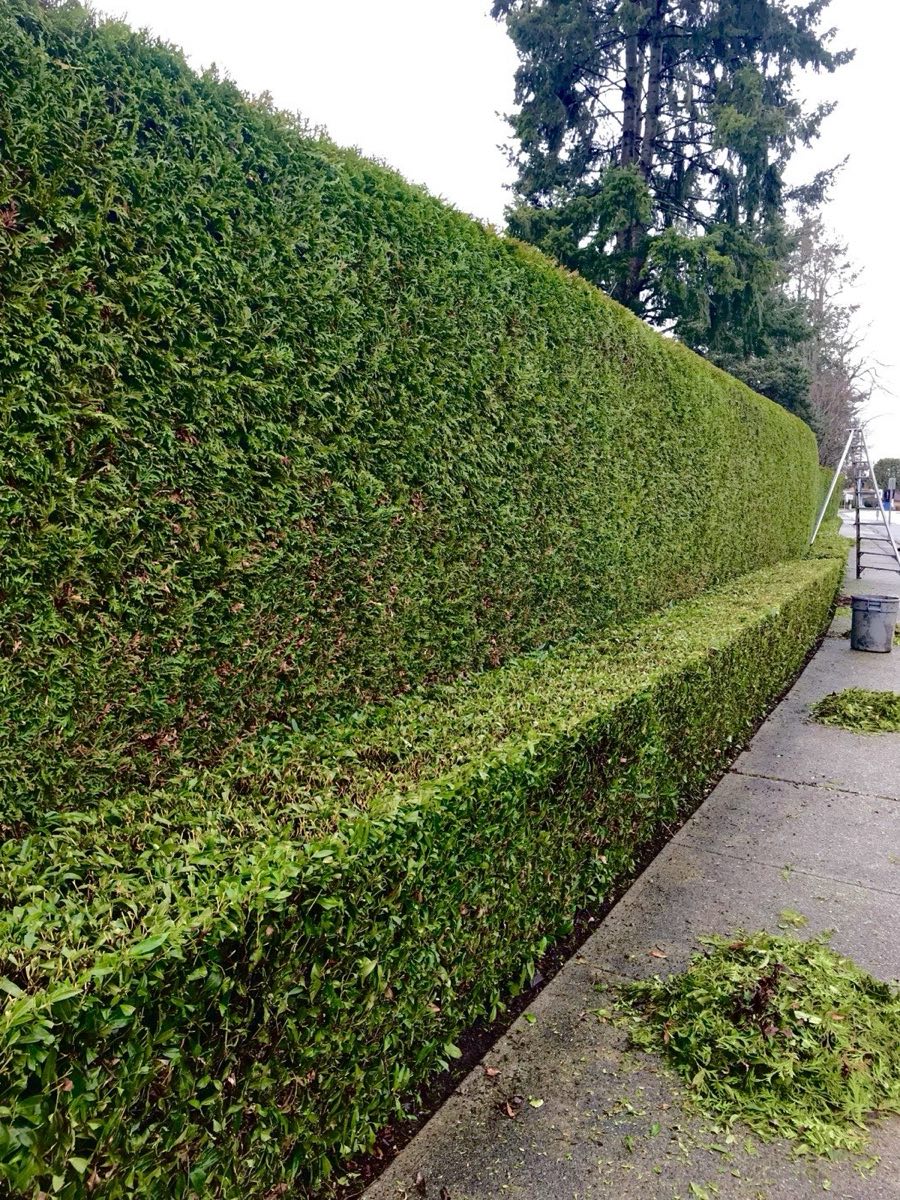
Cedar hedges are everywhere in the Fraser Valley for good reason: they grow fast, they screen well, and they handle our wet winters. But they have one habit that surprises a lot of homeowners — cedars don't grow back from brown wood. Cut past the green growth into the bare interior and that patch stays bare, more or less forever. Which means when and how you trim matters more than it does for almost any other plant in your yard.
The trimming windows that work here
In the Fraser Valley and Lower Mainland, the two best windows are:
- Late June through early August — after the spring flush of growth has hardened off. The hedge holds its shape longest from a summer trim, because most of the year's growth is already done.
- September to early October — a lighter tidy-up trim, early enough that the cut ends harden before the first frosts.
What to avoid: heavy trimming in the middle of a heat wave or drought, when the hedge is already stressed, and late-fall cuts that leave fresh wounds heading into frost. A stressed cedar shows it — tips brown off and the hedge looks scorched for months.
The nesting-season rule
One thing many people don't know: songbirds nest in cedar hedges from roughly March through August, and active nests are protected under the BC Wildlife Act. That doesn't mean you can't trim in summer — it means the hedge should be checked for active nests first. It's a two-minute walk-along that we do as a matter of course on every summer hedge job. If there's an active nest, that section waits a few weeks. The hedge doesn't mind.
How to keep a hedge thick to the ground
The most common mistake we see is trimming a hedge dead vertical — or worse, wider at the top than the bottom. The top then shades out the base, the lower branches thin, and within a few seasons you have a hedge on stilts with gaps you can see the neighbours through.
- Keep a slight taper — a touch wider at the base than the top, so light reaches the bottom growth.
- Trim little and often rather than letting it get away and cutting hard. Cedars respond well to regular light trims; they respond badly to being reclaimed.
- Stay inside the green. Always leave a layer of live green growth over the whole face. That green layer is the only part that regenerates.
- Sharp blades, clean cuts. Ragged tears brown off; clean cuts heal green.
Already got gaps? A hedge with brown holes can sometimes be encouraged to close up over a couple of seasons by trimming the growth around the gap so light gets in — but honestly, some hedges are past saving that way. We'll tell you which yours is before you spend money on it.
When it's a ladder job, call someone insured
Anything over head height changes the math. Tall hedges mean ladders or platforms, both hands on a trimmer, and usually a fence, greenhouse or parked car directly below. It's exactly the kind of job where hiring an insured crew with WorkSafeBC coverage stops being a nice-to-have. We trim cedar hedges at every height, haul every clipping away, and leave the lines square enough to sight down.
Got a hedge that's getting away on you?
Free estimates across the Fraser Valley and Lower Mainland — itemized, no pressure, and honest about what your hedge can and can't come back from.
Request a Free Quote